

Wisconsin’s role in the future of health innovation
News originally published by
Wisconsin Economic Development Corporation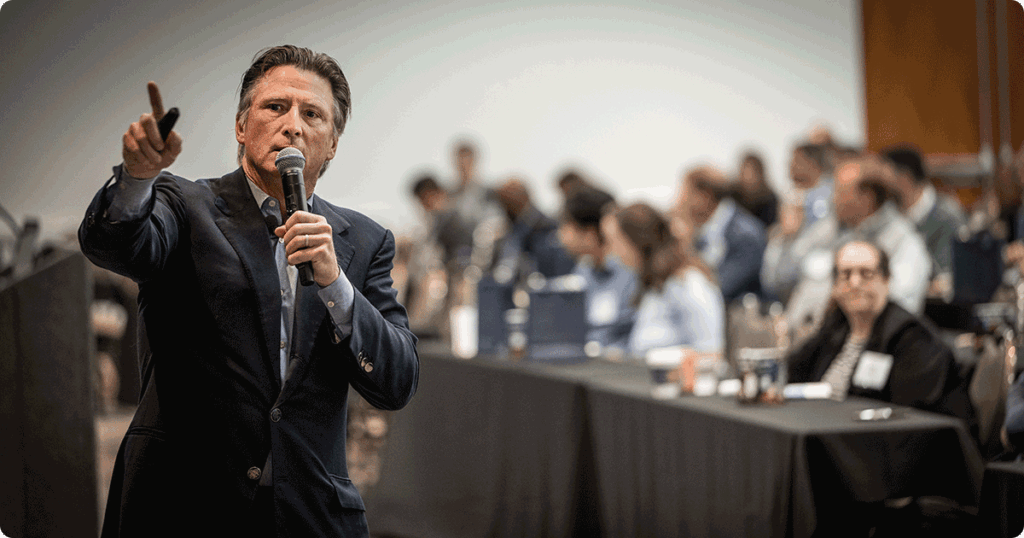
Jonathan Bush
A healthcare market forecast. A keynote on data. A panel discussion with venture capitalists. A session on cutting costs, not care.
At first glance, these topics might appear to have little in common, other than all being related to health technology. But over the course of the Wisconsin Biohealth Summit’s +Venture Health Pre-Summit Experience, an integrated story began to emerge about how Wisconsin innovators’ contributions may come together to shape the future of healthcare.
“Mixed bag” market with momentum emerging
The pre-summit event, held in Milwaukee Oct. 21, began with a market outlook from investor Lance Lange, the Milwaukee-based managing director of equity capital markets for Baird, who described the healthcare industry as a “mixed bag.”
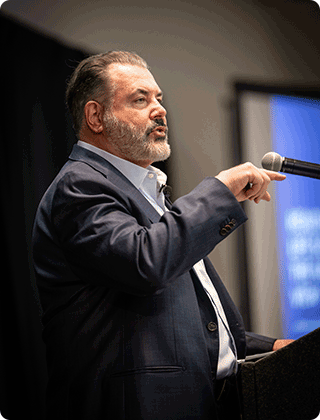
Lance Lange
The biohealth sector, he emphasized, is regaining momentum after a challenging period, as investors responded positively to promising clinical results and renewed fundraising. “Good data is being rewarded,” he said. Conversely, the medical technology industry has been underperforming.
Lange emphasized that innovation remains essential to attracting investment in a more selective healthcare market: “Those folks who really have something innovative and differentiated will be able to get funded.”
Increasingly, the biopharmaceutical subsector is also increasingly dominating healthcare investment. Lange noted that approximately 80% of healthcare public-market transactions in 2026 involved biopharmaceutical companies: “Big pharma is buying.”
Lange reflected on the growing importance of artificial intelligence (AI) across the healthcare sector. He described AI as “ubiquitous,” noting that nearly every conversation with healthcare companies now includes discussions about AI strategy and implementation, as AI is beginning to demonstrate measurable value. “We are starting to see some real efficiency gains,” he said.
The overall message was cautiously optimistic: The healthcare market may be a mixed bag today, but for companies with strong data, meaningful innovation, increasing biotech activity, and new opportunities through AI, the outlook appears encouraging.
Doctors, devices, drugs, data
Keynote speaker Jonathan Bush, CEO and cofounder of Boston-based Zus Health, challenged attendees to think beyond AI itself and focus on what will truly determine future success: connected, trusted data.
“We’ve always had the doctor. We’ve always had the devices. And God knows we love the drugs,” Bush said. “What is going to come next depends on the fourth D, and that is data.”
Bush argued that healthcare’s biggest challenge remains fragmentation. Patient information is often trapped within individual health systems and electronic medical records, making it difficult for providers, researchers, and innovators to access a complete picture of care. AI, he noted, can only be as effective as the data behind it.
Bush said regions that excel at connecting information, organizations, and talent would be better positioned to capture the next generation of economic growth. Healthcare’s future depends not simply on technological breakthroughs but on the ability to share knowledge, collaborate effectively, and build systems that allow innovation to move faster.
“The future is already here, but it is unevenly distributed,” said Bush. “Collaboration may prove to be the most powerful innovation of all.”
Digital health investors look beyond technology
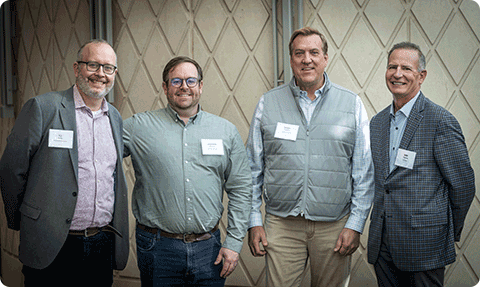
E.J. Reedy, Andrew Wegrzyn, Mark Bakken, Dan Fleming
The digital health investor panel at the biohealth pre-summit was moderated by E.J. Reedy of Chicago-based PACE Healthcare Capital. The panel—featuring venture capital leaders Mark Bakken of Madison’s HealthX Ventures, Dan Fleming of RC Capital (Cincinnati), and Andrew Wegrzyn of SixThirty Ventures (St. Louis)—reinforced many of the ideas that Bush introduced.
Panelists described a healthcare landscape filled with opportunity (particularly for entrepreneurs), touching on affordability, efficiency, workforce challenges, and patient outcomes. They said AI is accelerating product development and helping startups get going, but cautioned that AI alone is not enough to create a durable business.
“It still comes down to the people,” Bakken shared. After all, successful companies are built by people. At the earliest stages of a startup, panelists agreed that “team quality” remains the most important factor.
The panel suggested that ultimately Wisconsin’s greatest strength may not be access to capital itself. Rather, it’s the state’s ability to generate talent, support entrepreneurs, and connect innovators with customers, investors, and industry partners.
“The capital follows the opportunity set. The capital doesn’t create the opportunity set,” observed Fleming.
Legal Disclaimer:
EIN Presswire provides this news content "as is" without warranty of any kind. We do not accept any responsibility or liability for the accuracy, content, images, videos, licenses, completeness, legality, or reliability of the information contained in this article. If you have any complaints or copyright issues related to this article, kindly contact the author above.
